Retail
Innovative Retail Spaces for Modern Commerce
Shopping Malls & Lifestyle Centers
Modern shopping malls and open-air lifestyle centers are evolving beyond pure retail. Successful mall design balances anchor tenants, boutique shops, and communal spaces for dining or entertainment.
Attractions like playgrounds, indoor amusement parks, and even aquariums give families more reasons to visit.
Intuitive layouts ensure smooth foot traffic flow throughout the complex.
Placemaking elements (art, fountains, seating) invite shoppers to linger and socialize.
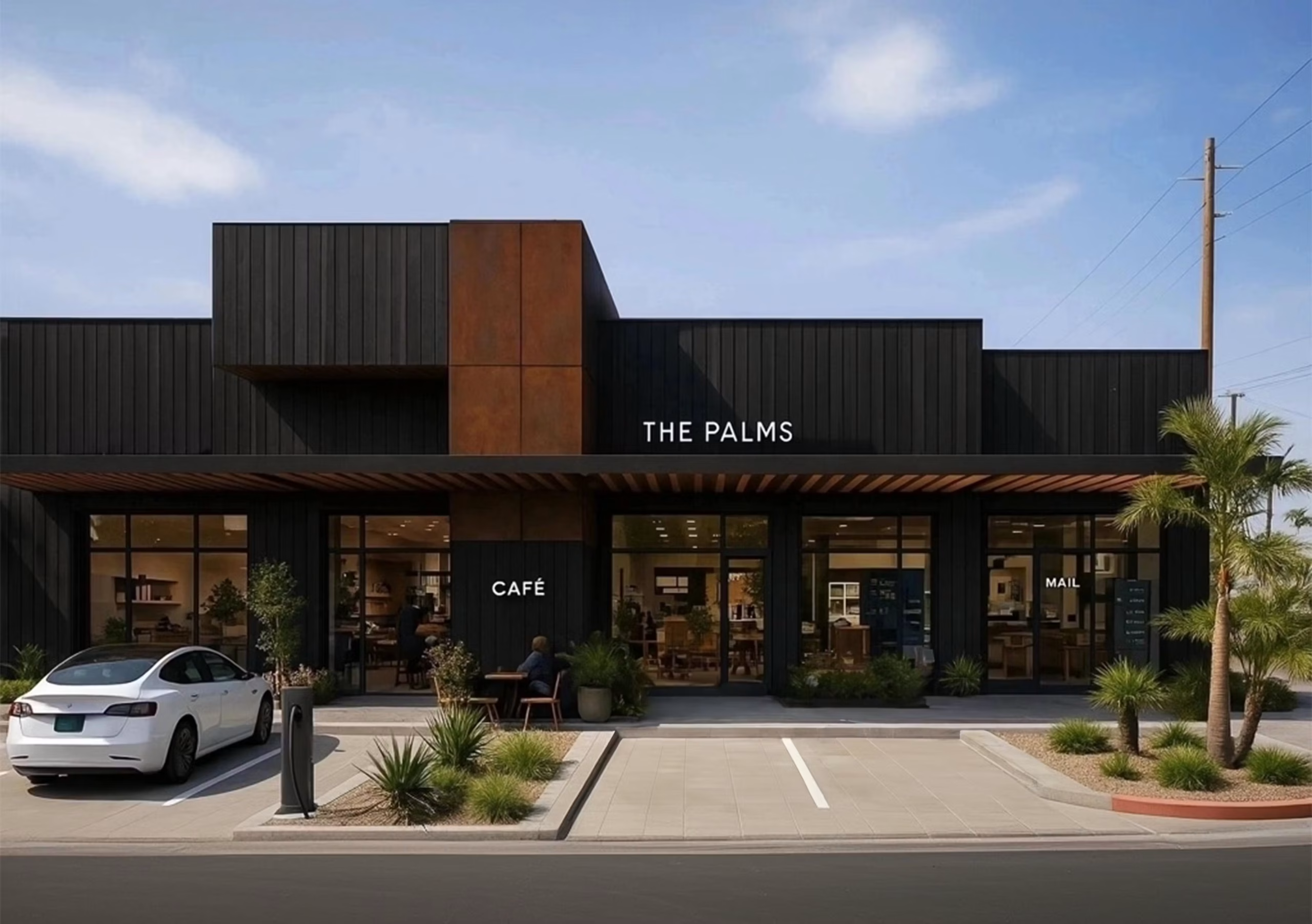
High Street & Urban Retail
Urban high streets and main street retail districts thrive on context-sensitive design. In city centers, stores must fit into existing streetscapes and often historic environments.
Engaging storefronts with appropriate scale and character enhance the pedestrian experience.
Minimal setbacks bring displays right up to passersby, creating visual interest.
Mixed uses above (offices or apartments over shops) maximize land use and create 24/7 activity.
Mixed-Use Retail Developments
Mixed-use retail projects combine shopping, dining, offices, and residences into cohesive communities. Designing these developments requires consistency across different uses while preserving each space’s unique character.
Walkability and transit connections are critical success factors for today’s mixed-use projects.
Street-level retail engages pedestrians with transparent storefronts and active public plazas.
Private amenities for residents balance with vibrant public shopping streets.
Big-Box Stores & Large-Format Retail
Humanizing Scale
Flexible Design
Designing big shells that can be adaptively reused if retail demand shifts, future-proofing the investment.
Adaptive Reuse
Many underperforming big-box stores are being repurposed into healthcare centers, schools, or community hubs.
Experiential Retail & Customer Engagement
Instagram-Worthy Spaces
Creating visually striking environments that encourage social media sharing and drive organic marketing.
Interactive Elements
Incorporating interactive displays, demo areas, and event spaces for workshops or performances.
Dwell Time Optimization
Strategic placement of lounges, cafés, and seating areas that invite customers to stay longer and explore more.
Sustainability & Adaptive Reuse
Green Building Features
Creative Reuse
Converting derelict malls into mixed-use communities or transforming department stores into offices saves resources and revitalizes neighborhoods.
Flexible Design
Creating spaces with modular elements that can change with seasons and trends, extending the useful life of the structure.
Smart Retail Spaces & Technology Integration& Adaptive Reuse
IoT Integration
Smart lighting and HVAC systems adjust to occupancy in real time, improving comfort and efficiency.
Interactive Features
Data-Driven Design
Analyzing heat maps of foot traffic to place key displays and using AI-driven simulations to test different layout scenarios.
✦✦✦
“The future of retail is not just about selling products, but creating memorable experiences that can’t be replicated online. Our AI-powered approach helps clients design spaces that customers want to visit again and again.”
Patrick Chopson, AIA
Principal Architect