Responsible Disposal & Recycling Guide
Learn how to correctly dispose of our product materials to reduce environmental impact and support a cleaner future.

What is Disposal
Choose a Product to See Your Disposal Options
Our packaging is made from rapidly renewable, plant-based materials — not fossil-based plastic. That means even if it goes to landfill, it’s still a more sustainable choice.

Home Composting
At a Glance: What to Do With Compostable Packaging
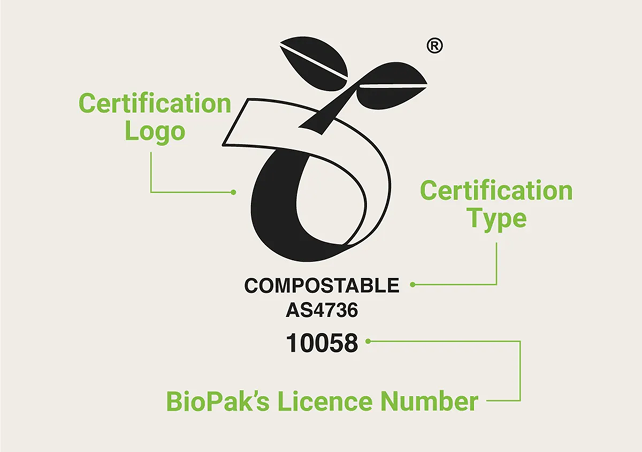
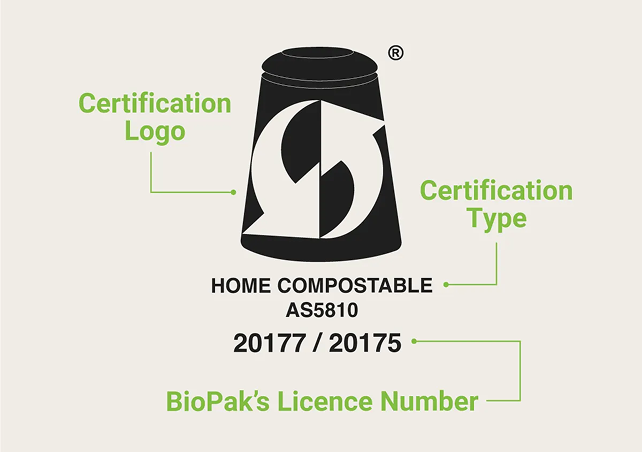
There are only two types of compostable logos you need to look for in Australia and New Zealand, issued by the Australasian Bioplastic Association (ABA): home (AS5810) and industrially (AS4736) compostable logos.
To check if a product is certified, look for one of these two logos AND the company’s sub-licence number stated underneath.
Industrially Compostable (AS4736)
Home Compostable (AS5810)

Recycling
Does a Composting Certification Really Matter?
Yes! You should always look for a composting certification under the Australasian Bioplastics Association. To get these certifications, products have to undergo stringent, time-consuming and costly test regimes.
If a product doesn’t hold this certification, it could be greenwashing, which can lead to packaging failing to break down in a compost environment and contamination. Certifications are the only way to know if a product truly is what it says it is.
This is why we – as consumers – should always trust and support products showing the correct logos.

Benefit
What Recycling Labels Should You Look For to Know the Truth?

Recyclable
This is assumed safe for kerbside recycling. To get this logo, more than 80% of councils must accept this item in kerbside recycling.

Conditionally Recyclable
This means you must follow the specific instructions beneath the label in order for the item to be recycled.

Not Recyclable
This means an item cannot be recycled in kerbside recycling and must be placed in your general waste bin.

Check Locally
This means an item MAY be recyclable and it’s necessary to check with arl.org.au or your local council for more information.

Packaging Can Be Disposed Together
Why Is Composting the Best Recycling Choice for Foodservice Packaging?
Traditional recycling of paper, metal, plastic and glass is often difficult in the foodservice industry, because it’s either too small to be sorted by recycling plants, is usually contaminated with food, or is made of various materials that can’t be separated easily.
At BioPak, we see composting as the ideal end-of-life option for foodservice packaging. That’s because it acts as a vehicle to help curb food waste – packaging and food waste can all go in one bin, the organic waste bin, to be composted industrially.
Not only that, food waste emits methane in landfill, a greenhouse gas on average 28 times more potent than CO2. Composting helps avoid these emissions, while creating a nutrient-rich resource that can improve soil quality!

Insights & Updates
Stories, Guides, And Updates To Help You Make Informed Choices.
Regulation
Regulation
Regulation

Start Your Sustainable Journey
Why This Matters
Doing right by the planet doesn’t have to be complicated. With so much greenwashing, finding what’s truly sustainable can be tricky. At ONEarth, we cut through the noise—evaluating every product against clear, fact-based criteria and tailoring solutions to your needs. Truth over trends, always.